Fast Lane Drive - Fast Lane Drive

AAA vs National Auto Clubs | Fast Lane Drive

How to choose a membership for roadside support and driving experiences

By Fast Lane Drive

Comparing AAA and national auto clubs starts with what you want your membership to do. You might need help after a breakdown, benefits for an RV trip, or a community of people who enjoy driving as much as you do. Those goals call for different comparisons.

AAA, Better World Club, Good Sam and other motor clubs offer roadside services with different benefits and limits. Social driving clubs such as Fast Lane Drive focus on organized experiences and relationships. A driver can have a reason to join both types of organization.

Auto club memberships at a glance

Comparing AAA and other auto clubs

AAA

AAA combines roadside assistance with travel services and member discounts. Compare your local membership options, paying attention to towing distance, household coverage and the benefits included in each tier.

Better World Club

Better World Club offers roadside assistance for cars and bicycles, with a focus on sustainability. Choose the plan that matches how you travel, and check its towing or bicycle transport limits.

Good Sam Roadside Assistance

Good Sam offers roadside plans for cars and RVs. Review which vehicles qualify and where the plan will tow you, especially if you want to reach a preferred repair facility.

National Motor Club

National Motor Club offers roadside and additional benefits that vary by membership. Check whether your plan arranges assistance or reimburses eligible expenses, along with coverage limits and availability in your state.

National Automobile Club

National Automobile Club focuses on commercial and fleet roadside services, with individual memberships available to eligible drivers. Confirm whether its business or personal options match your needs and residency.

Fast Lane Drive for the driving experience

Fast Lane Drive brings exotic car owners together through curated drives, social events, networking and philanthropy. Membership is built around enjoying your car, meeting other enthusiasts and sharing experiences.

When considering FLD, explore the local event calendar, vehicle requirements, application process and event fees. A roadside membership and an FLD membership can complement each other, providing practical support and a community to enjoy the road with.

The summaries above describe membership categories. The provider details below link to current benefits and eligibility information.

How AAA compares with other roadside clubs

AAA

AAA combines roadside assistance with travel planning and discounts. Its roadside services include towing, battery assistance, tire changes and lockout help. That combination may appeal to someone who wants everyday driving support and travel benefits in one membership. See AAA services.

Compare the membership offered by your local AAA club, including its towing allowance, annual service limits and renewal price. Longer towing allowances can matter if you want to reach a preferred repair shop. Add only the household coverage and extra benefits you expect to use.

Better World Club

Better World Club offers auto roadside plans and a separate bicycle option, including support for e-bike riders. It describes its roadside service as carbon neutral. Its published Basic Auto and Premium Auto plans have different towing allowances, so the appropriate choice depends partly on the distances you drive. Check that the membership you select actually includes roadside assistance, because the company also offers a lifestyle-focused Starter membership. See Better World Club plans.

Good Sam Roadside Assistance

Good Sam offers both auto and RV roadside plans. Its towing benefit is tied to the nearest qualified service facility; choosing another destination can involve additional charges. RV owners should check the exact plan for their motorhome, trailer or other vehicle configuration. When comparing costs, use the roadside product and its benefit brochure, rather than assuming that another Good Sam membership includes the same services. See Good Sam roadside plans.

National Motor Club

National Motor Club illustrates why the way a benefit is delivered matters. Its Security Premier Plus page describes roadside assistance reimbursement up to $100 per disablement, alongside other membership benefits. A capped reimbursement can leave a different out-of-pocket cost than a service arrangement based on towing distance. Benefits depend on the plan and state; NMC currently lists membership as unavailable in Alaska, Alabama, California and Washington. See NMC plan details.

National Automobile Club

National Automobile Club is a separate organization from National Motor Club. NAC emphasizes commercial and fleet roadside assistance, including towing, tire changes, lockout help and fuel delivery. Its site also identifies individual membership for California residents. Business owners should compare its fleet options against their commercial requirements, while individuals should confirm their eligibility before considering a plan. See National Automobile Club services.

What to compare before joining

A useful comparison goes beyond the first-year price. Start with your vehicles, your usual routes and the service you would want if a trip were interrupted. Ask each provider the same questions:

  • Who is covered, and in which vehicles? Check the rules for household members, rentals, motorcycles, trailers and business use.
  • Where can the vehicle be towed? A mileage allowance and transport to the nearest qualified facility are different benefits.
  • How do you receive help? Confirm who arranges the service, what you pay upfront and whether reimbursement has a dollar limit.
  • What limits apply? Review service-call limits, activation periods, exclusions and charges for extra mileage or equipment.
  • What will you pay at renewal? Compare the ongoing membership cost and required add-ons as well as any introductory offer.

For an exotic or performance car, also ask how the provider handles your particular model and its transport requirements. Check those requirements against the vehicle manufacturer’s guidance before you need a tow. A plan’s geographic reach alone does not answer whether a specific recovery will meet your needs.

Where Fast Lane Drive fits

At Fast Lane Drive, our membership centers on shared driving experiences and a community of exotic car owners. We organize drives and social gatherings, with opportunities for networking and philanthropy. Members can also attend events beyond their home chapter. Our membership information explains the application process, vehicle requirements and event fees.

Evaluate a social driving membership through the experience you want to have: the people you hope to meet, the events you would attend and the places you would like to explore. Ask about the local calendar and the commitment involved. Those questions help you decide whether the club will become a regular part of your life.

Roadside support should remain a separate buying decision. Joining a social driving club should not be treated as a replacement for a suitable roadside assistance plan. If both practical support and a driving community matter to you, evaluate each membership on its own terms.

Frequently asked questions

Is AAA the same as a national auto club

AAA is an automobile association serving drivers across North America. The phrase “national auto clubs” can describe a broader category. National Motor Club and National Automobile Club are also names of separate businesses, so check the exact organization and plan you are comparing.

Which auto club is best for an exotic car owner

The answer depends on the benefit you need. For roadside help, confirm vehicle eligibility, recovery arrangements and towing destinations. For organized drives and social experiences, compare the events, membership requirements and community of an enthusiast club.

Can I join AAA and a social driving club

You can evaluate both memberships for different needs. A roadside plan can support you after a breakdown, while a social club gives you opportunities to meet other enthusiasts and take part in organized activities. Check each organization’s membership terms before joining.

Interested in driving with Fast Lane Drive? Explore the club and start your membership application.
Electric vs Gasoline vs Hybrid Vehicles | Fast Lane Drive

A Fast Lane Drive guide to supercars and hypercars

By Fast Lane Drive

The electric vehicles vs. gasoline vehicles debate becomes more interesting when you bring supercars and hypercars into it. A Rimac Nevera, a Pagani Utopia Roadster and a Ferrari F80 take different approaches to performance. Hybrid technology adds another choice for owners who want combustion power and electric assistance in the same car.

For a Fast Lane Drive member, the decision extends beyond acceleration figures. Think about the experience you enjoy behind the wheel, the routes you want to drive and how the car fits into a weekend away. The right powertrain is the one that suits the way you will actually use it.

The differences that matter to enthusiasts

The differences that matter to enthusiasts

Gasoline supercars

For enthusiasts who enjoy engine sound, rising revs and gear changes, gasoline cars offer a familiar driving experience. Preparing for a club drive means checking the required fuel grade and planning refueling stops. Ownership involves regular engine and transmission servicing, following the manufacturer’s maintenance schedule.

Electric supercars

Battery electric cars deliver responsive power through electric motors. Before a longer drive, consider the car’s expected range and identify compatible charging stops along the route. Convenient charging access and battery condition are key ownership considerations, especially when planning a weekend away with Fast Lane Drive.

Hybrid supercars

Hybrids combine a combustion engine with electric assistance, adding another dimension to the driving experience. Trip preparation depends on the model: you will need to consider fuel requirements, battery use and available driving modes. Plug-in hybrids also accept external charging. Maintenance includes the combustion engine and the car’s electrical systems.

For your next FLD drive, consider how each car fits the route, the time away and the experience you enjoy behind the wheel.

These are broad distinctions. Individual cars differ substantially in weight, range, performance and maintenance requirements. The examples below show why the powertrain label alone cannot tell you which car you will enjoy most.

Gasoline supercars and the appeal of the engine

If the engine is central to your enjoyment of a car, a gasoline supercar deserves a place on your shortlist. The response as revs rise, the sound under load and the feel of a gear change can be reasons to choose one. Those preferences are personal, and they matter when buying a car for pleasure.

The Pagani Utopia Roadster shows that combustion-only engineering still has a place among modern hypercars. Pagani specifies a twin-turbo V12 without hybrid assistance. It is a useful counterpoint to the idea that every new flagship must follow the same technical path. See Pagani vehicle information.

For a driving weekend, consider fuel availability, luggage space, visibility and comfort over several hours. A car that feels wonderful on a short test drive still needs to work for the routes and trips you want to take.

Electric hypercars and a different driving experience

The Rimac Nevera uses four electric motors, with a dedicated motor driving each wheel. Its control system adjusts how torque is distributed, showing how electric propulsion can shape a car’s behavior as well as its acceleration. The Nevera and Nevera R give enthusiasts an electric hypercar reference point far beyond ordinary commuting. Explore Rimac Nevera engineering.

A battery electric vehicle stores the energy for driving in its battery and needs external charging to replenish it. Actual range changes with temperature, speed, elevation and driving style. For a scenic drive, use the expected conditions and a sensible reserve when planning stops. Read the Department of Energy EV overview.

Home charging can make departure preparation convenient. On a longer trip, look at the charging options along the route and at your destination before you commit to the itinerary. The planning question is whether the available stops fit the day you want to have.

Hybrid supercars combine different strengths

A hybrid pairs a combustion engine with electric propulsion assistance. Conventional hybrids recover energy through braking and can use the engine to charge their battery. A plug-in hybrid also accepts electricity from an external source. Electric-only driving capability varies, and some hybrid systems cannot drive the car on electricity alone. Understand hybrid systems.

The Lamborghini Revuelto combines a V12 with three electric motors. Its design shows how electrification can accompany the engine configuration enthusiasts associate with a brand. For a driver drawn to a V12 experience, a hybrid badge does not mean the engine has disappeared from the experience. Explore the Lamborghini Revuelto.

At hypercar level, Ferrari and McLaren illustrate two more approaches:

Ferrari F80: a V6 hybrid powertrain in Ferrari’s flagship supercar. Ferrari F80 overview.

McLaren W1: a V8 paired with an electric E-module. McLaren W1 powertrain.

These cars make it worth asking what the hybrid system is designed to achieve. Evaluate the way the engine and motors work together, how the controls feel and how the car manages energy during your intended use. A hybrid badge alone does not promise long electric range or low running costs.

Planning a drive with Fast Lane Drive

Fast Lane Drive brings owners together for scenic drives, social events and experiences across chapters. That makes the whole day relevant to the vehicle choice, including the journey to the meeting point, the route itself and the trip home. Explore the FLD experience.

Before a local drive or a weekend visiting another chapter, review the itinerary and discuss any specific vehicle needs with the event team. Useful preparation includes:

Start with enough fuel or charge for the first stage, with a reserve for route changes.

For an EV, check compatible chargers, access hours and a backup location along the route.

For a plug-in hybrid, follow the manufacturer’s guidance on charging and drive modes.

For an overnight stay, confirm actual charging availability with the property and check access for a low car.

Charging time depends on the vehicle, battery state and charging equipment. Treat a hotel charger and a compatible DC fast charger as different options when planning the schedule. See charging guidance.

Driving with other enthusiasts also gives you a chance to ask practical ownership questions: how a car handles a weekend away, what servicing involves and which features its owner uses most. Those conversations can help you build a better shortlist.

Ownership involves more than fuel or electricity

Battery electric vehicles generally need less routine powertrain maintenance because they have fewer moving parts and do not require engine oil changes. Hybrids retain a combustion engine and its servicing needs. Battery condition, cooling-system requirements and manufacturer guidance still matter. Compare maintenance needs.

For an exotic car, compare the complete ownership picture: insurance, tires, servicing, warranty coverage, storage and access to qualified technicians. Request model-specific estimates. A general claim about EV savings or hybrid efficiency cannot tell you what a particular hypercar will cost to own.

Frequently asked questions Faq’s

Are electric supercars faster than gasoline supercars?

Some electric hypercars deliver exceptional acceleration, but “faster” can mean a launch, a top speed or a lap time. Compare the exact models and equivalent test conditions. A single acceleration number does not describe braking, handling or the experience behind the wheel.

Why are manufacturers building hybrid hypercars?

Electric motors give designers another way to deliver power alongside a combustion engine. The Ferrari F80 and McLaren W1 demonstrate that approach with different engine configurations. The result depends on the complete vehicle, including its chassis, controls and energy management.

Do all hybrid supercars need to be plugged in?

No. Conventional hybrids do not use external charging. Plug-in hybrids can recharge from an external supply as well as recovering energy while driving. Confirm the exact model’s charging capabilities and maintenance instructions. See plug-in hybrid basics.

Can a hybrid supercar drive using only electricity?

Some can, within model-specific limits. Others use electric assistance without offering a normal electric-only driving mode. Check the manufacturer’s specification for the exact car, including any speed, distance or operating restrictions.

Can an electric hypercar work for a road trip?

Yes, if the route and charging arrangements suit the vehicle. Plan around realistic range, compatible equipment and available stops. For a group trip, agree on the schedule in advance rather than assuming every car will need the same stops.

Are electric hypercars cheaper to maintain?

Electric propulsion usually reduces routine engine-related servicing, but that does not establish the total maintenance cost of a hypercar. Tires, specialized components and model-specific work still need to be priced. Review the service schedule and warranty for the actual vehicle.

Does Fast Lane Drive accept electric or hybrid vehicles?

Fast Lane Drive’s FAQ confirms that qualifying electric supercars can be considered. Eligibility depends on the particular vehicle and the membership application process. Check the current approved vehicle selection and speak with the membership team about your model. View FLD membership FAQs.

Which powertrain should I choose for FLD drives?

Start with what you enjoy and the trips you plan to take. Consider a gasoline car for its engine character, an EV for its electric driving experience, or a hybrid for its combination of engine and motor power. Then assess the specific model’s comfort, range and ownership requirements.

Bring your interest in exceptional cars to a community that shares it. Explore Fast Lane Drive and apply for membership.

Member Business Connections That Move You Forward

A convoy pulls into a private dinner after a full day of driving. The cars get attention, but the conversations are the real point. Around the table are founders, investors, physicians, attorneys, operators, and collectors who have already achieved enough to be selective about where they spend their time. That is where member business connections take on real value: not as another stack of business cards, but as relationships formed among people with momentum.

Your exotic car is just the beginning. It can be the reason people meet, but the right community gives that first interaction somewhere to go. Shared experiences create context. Repeated access creates familiarity. Over time, a fellow driver can become a trusted advisor, a client, a capital partner, or simply the person who makes a new city feel like home.

Why Member Business Connections Carry More Weight

Most networking is built around introductions. Someone has a name, a title, and a reason to make a pitch before the conversation has earned any trust. That format has its place, especially when the objective is transactional. But it rarely creates the kind of relationship people rely on when the stakes are high.

Member business connections develop differently. You see how someone carries themselves during a long drive, how they treat staff at a dinner, whether they show up on time, and how they respond when plans change. You hear what they care about when the conversation is not limited to a conference-room agenda. That does not replace professional diligence, but it gives you a more complete picture of the person behind the company.

The strongest opportunities often begin without an immediate ask. A founder talks through an expansion challenge over coffee at a rally stop. An attorney mentions a specialized issue that an operator has handled before. A real estate investor meets a potential partner at a chapter event, then spends months building confidence before discussing a project. The value is not forced. It compounds.

This is also why exclusivity matters. A private, application-based membership model is not about creating distance for its own sake. It is about protecting the quality of the room. When people know that fellow members have made a meaningful commitment to the community, there is a stronger baseline of accountability, discretion, and intent.

Shared Road Time Changes the Conversation

There is a difference between meeting someone at a crowded reception and sharing a multi-hour route through mountain roads, wine country, or a new city. The latter creates unstructured time, and unstructured time is where real rapport tends to form.

A drive removes many of the habits that make conventional networking feel staged. There is no need to dominate a room. No pressure to deliver a perfectly rehearsed elevator pitch. Conversation can move naturally from cars and travel to leadership, family, investing, philanthropy, or the next chapter of a business.

That range matters for accomplished people. You are not looking for contacts who only know what you do. You are looking for peers who understand the pace, responsibility, and ambition behind it. A meaningful connection should make your professional life stronger without making every social interaction feel like work.

The car is a common language, but it is not the entire conversation. Some members know every detail of a limited-production hypercar. Others simply value the experience of driving something exceptional with people who appreciate it. What connects them is a preference for doing more with their time, their relationships, and their access.

The Network Should Travel With You

A local circle can be valuable. A network that extends beyond one city creates a different level of possibility. Business does not stay neatly inside a ZIP code, and neither should the relationships that support it.

Cross-chapter access gives members a more natural way to enter new markets. Instead of arriving in Miami, Toronto, Los Angeles, Monaco, or a smaller but highly connected regional market as a stranger, you can join people who already understand the local landscape. You may find a restaurant recommendation, a trusted service provider, an introduction to a potential customer, or an invitation to a memorable event. None of that should be assumed, but the foundation for it exists.

For executives who travel often, founders evaluating expansion, and investors watching opportunities across regions, this kind of continuity is meaningful. The right introduction in an unfamiliar city can save time. It can also prevent the isolated, transactional feeling that comes with building every new relationship from zero.

Fast Lane Drive brings that idea to life through an international chapter community built around recurring drives, private gatherings, travel, and philanthropic events. The goal is not to turn every event into a board meeting. It is to create enough quality time, in enough places, for relationships to develop with substance.

How to Build Better Connections Inside a Private Club

Membership creates access. It does not create trust automatically. The members who gain the most from a high-caliber community tend to approach it with curiosity, consistency, and a willingness to contribute.

Show Up Before You Need Something

The easiest way to weaken a relationship is to appear only when you need a referral, funding, or a favor. Attend drives because you want to be part of the experience. Join dinners when there is no immediate business outcome attached. Familiarity is earned through presence.

Consistency is especially powerful in a club environment. You do not need to attend every event, and busy seasons are real. But showing up regularly gives people the chance to know you beyond your profession. When an opportunity eventually arises, the conversation begins from a stronger place.

Lead With Genuine Interest

Accomplished people are used to being pitched. A better opening is a thoughtful question about what they are building, what they are learning, or what brought them to a particular car or event. Listen for where your experience may genuinely be useful.

This does not mean avoiding business entirely. It means allowing business to emerge from relevance rather than forcing it into the first five minutes. If you can make a useful introduction, share a hard-won lesson, or point someone toward a capable resource, do it without keeping score.

Protect the Room

Private communities depend on discretion. Not every conversation at dinner belongs on social media. Not every personal detail should become a story at the next event. And not every connection is an invitation to sell.

Respecting boundaries is part of professional credibility. When members know you can be trusted with context, you become easier to introduce and more likely to be included in conversations that matter.

Follow Through With Precision

A warm conversation loses value when the follow-up is vague. If you promise an introduction, make it. If you offer to send a resource, send it promptly. If there is a legitimate reason to continue the conversation, suggest a specific next step.

The best follow-up is brief and relevant. Mention the moment that made the conversation memorable, clarify how you can help, and leave room for the other person to decide whether to continue. High-performing people appreciate clarity more than persistence.

Not Every Connection Needs to Become a Deal

One mistake in relationship-driven communities is measuring every interaction by immediate return. That mindset misses the larger advantage. Some of the most valuable members in your circle may never become clients or partners. They may become trusted friends, sounding boards, travel companions, or connectors who broaden how you see a problem.

There are trade-offs. A curated club is not designed for mass lead generation, and it should not be treated like one. If your only goal is collecting prospects, you will likely come across as opportunistic. The better approach is to become a person who adds energy, insight, and reliability to the group. Opportunity follows reputation.

It also depends on your stage. A founder may seek peer counsel and strategic introductions. An established executive may value a private setting where professional relationships grow without corporate formality. A collector may be looking for shared experiences first, with business connections developing naturally later. Each is valid, provided the intent is genuine.

Make Your Network Reflect Your Standards

High-performance vehicles are built around more than speed. They demand engineering, discipline, and attention to detail. Your network deserves the same standard.

The right member community gives you more than a calendar of impressive cars and destinations. It gives you a place to meet people who have outgrown average social circles, who understand the value of time, and who want their experiences to mean something beyond the moment. Bring curiosity, protect trust, and be the member others are glad to meet again. The relationships that move your life and business forward are rarely the loudest ones. They are the ones built over miles, moments, and mutual respect.

Most Exclusive Car Clubs Aren’t Just About Cars

A carbon-fiber badge, a limited-production car, and a private parking area can look exclusive. But the most exclusive car clubs understand that the car is only the credential. What separates a serious club from a casual weekend meetup is who is beside you at the starting line, what happens after the drive, and whether the relationships continue when the engines go quiet.

For accomplished owners, access is no longer about being seen in the right car. It is about entering rooms that are hard to reach alone: a private dinner with founders and investors, a rally through a new city with people who share your pace, or a trusted introduction that becomes a real opportunity. Your exotic car is just the beginning.

What Makes the Most Exclusive Car Clubs Different?

Exclusivity is often confused with scarcity. A club can restrict membership, charge a premium, and host an invitation-only event. That may create demand, but it does not automatically create value.

The clubs that earn their reputation curate the entire experience. They are selective about membership, deliberate about programming, and consistent about the standard of conduct in the room. Members know they will meet people who are accomplished, engaged, and there for more than a photo opportunity.

That changes the dynamic. A drive is not simply a procession of supercars. It becomes shared time with entrepreneurs, executives, physicians, attorneys, investors, collectors, and creators who already understand the discipline behind success. The common language starts with cars, then moves naturally toward business, travel, family, philanthropy, and the next ambitious idea.

A truly private club also protects that atmosphere. An application process matters because it signals that the community has a point of view. The goal is not to make the door difficult for its own sake. It is to make sure that every person walking through it adds to the experience.

The Real Asset Is the Room

A high-performance vehicle can command attention almost anywhere. It cannot, by itself, create trust. Trust comes from repeated proximity: early-morning driver briefings, long roads between cities, intimate dinners, and conversations that are not forced by a networking name tag.

This is why the strongest car communities build a rhythm rather than relying on one major annual event. Members need reasons to reconnect throughout the year. A local scenic drive may lead to a conversation at lunch. That conversation may become a referral, a partnership, an investment discussion, or a friendship that outlasts any vehicle in the garage.

Your network is your net worth, but only when it is a network built on real familiarity. The right club gives ambitious people a setting where relationship-building feels natural instead of transactional.

There is a trade-off. A large community can offer more introductions, more destinations, and a fuller calendar. A smaller group can feel more intimate. The best model does not force members to choose between scale and connection. It creates close local chapters while giving members access to a larger, vetted network when they travel.

Why a Global Network Changes the Membership Equation

A local club can be a strong place to meet nearby owners. But for members whose businesses, homes, and interests extend beyond one market, a single-city experience can feel limiting.

Cross-chapter access turns a car club into a passport. Instead of arriving in Miami, Scottsdale, Toronto, Monaco, Paris, or a mountain market like Idaho and Utah without a community, members can step into an established circle. There is less friction, more familiarity, and a stronger reason to make the trip count.

That matters because the best automotive experiences are rarely confined to one ZIP code. Some roads demand a destination. Some relationships deserve more than a quick introduction. Multi-city rallies, curated travel, and private events create the kind of shared memories that accelerate connection.

A global footprint also raises the standard locally. Members are not joining a club defined by one organizer’s personal circle. They are joining a broader culture with expectations around hospitality, participation, discretion, and how people show up for each other.

The Events Should Have a Purpose

Not every gathering needs a business agenda. In fact, the strongest clubs leave room for pure enjoyment: the sound of a cold start before sunrise, a well-planned route, a great meal, and the satisfaction of arriving somewhere worth remembering.

But a packed calendar without intention becomes noise. The experiences worth making time for are curated. They bring the right group together in environments where conversation can develop. A private dinner carries a different energy than a crowded public show. A multi-day rally gives people time to move beyond surface-level introductions. A philanthropic event gives the community a reason to connect around something larger than personal success.

The most effective programming typically blends four dimensions: driving, social connection, professional access, and shared purpose. When one is missing, the membership can feel narrow. When they work together, the club becomes part of a member’s real life rather than another subscription competing for attention.

Status Is Easy to Signal. Belonging Is Harder to Build.

There is nothing wrong with wanting a club that reflects what you have achieved. People work hard for the freedom to choose exceptional experiences, and they should not have to apologize for it.

Still, status alone has a short shelf life. The car that turns every head this season will eventually be replaced by another launch, another spec, another arrival at the valet. Belonging has more staying power. It comes from being recognized by people who know your story, remember your family, respect your work, and expect to see you at the next drive.

That is the difference between access and membership. Access gets you into an event. Membership gives you a place within a community.

At Fast Lane Drive, that idea is built around a private, application-based network that connects qualified high-performance vehicle owners across 28 chapters in North America and Europe. The point is not just to assemble remarkable cars. It is to create momentum among remarkable people through drives, rallies, dinners, travel, and giving back.

How to Judge Whether a Car Club Is Actually Worth Joining

Before applying anywhere, look beyond the highlight reel. Ask who attends consistently, not simply who appears in promotional photos. Ask how often members gather, whether events are organized with care, and what happens between them. A directory, member app, marketplace, and partner benefits can be useful, but they should support the community rather than substitute for it.

It is also worth considering fit. If you want track coaching and technical instruction, a performance-focused organization may be the better choice. If your priority is concours preservation, a marque-specific collector club may offer deeper expertise. If you want your vehicle passion to expand your social and professional orbit, look for a membership model designed around relationships and recurring shared experiences.

Discretion is another signal. The most valuable circles do not need to broadcast every conversation. They make members comfortable bringing spouses, business partners, and close friends into the environment because the culture feels considered.

Finally, assess the club’s ability to create continuity. One spectacular event is memorable. A year of meaningful experiences, across cities and with people you want to know better, is transformative.

Choose the Circle That Matches Your Next Chapter

You have outgrown average. Your time is valuable, your vehicle is exceptional, and your circle should reflect both. The right car club should give you more than a place to park or a date on the calendar. It should put better roads, better conversations, and better opportunities within reach.

Choose the community where you would still want to show up if nobody posted a photo. That is usually where the real value begins.

FAQ”S

1. What makes Fast Lane Drive different from other exotic car clubs?
Fast Lane Drive is more than a car club. It is a private global community built around exotic cars, meaningful relationships, curated experiences, philanthropy, and travel. Members join one chapter but gain access to the entire FLD network and events around the world.

2. How do I become a member of Fast Lane Drive?
Membership is application-based. Prospective members must apply with an eligible vehicle, complete an interview, and go through our membership review process. Applicants are reviewed by a board to ensure they are the right fit for the FLD community.

3. Do I need an exotic car to join Fast Lane Drive?
Yes. Fast Lane Drive has specific vehicle eligibility requirements designed to maintain the experience and identity of the club. Applicants must currently own an approved exotic, supercar, or qualifying performance vehicle when applying.

4. Can Fast Lane Drive members attend events in other cities and countries?
Yes. This is one of the biggest benefits of FLD membership. Your membership gives you access to the global Fast Lane Drive community, allowing you to connect with members and attend eligible events across chapters when you travel. Join one chapter. Experience the world.

10 Best Supercar Driving Destinations for 2026

A great supercar drive is not measured in top speed. It is measured in the moment the road opens, the group finds its rhythm, and a machine built for the extraordinary finally has room to breathe. The best supercar driving destinations deliver that rare combination of road quality, scenery, hospitality, and the right people to share it with.

For serious owners, the destination matters as much as the car. A predictable route, secure parking, strong local support, and an exceptional place to gather after the drive can turn a weekend away into a relationship that lasts years. These are the roads and regions worth putting on your calendar.

What Makes a Supercar Destination Worth the Trip

The right destination is not always the one with the most famous road. A 15-mile mountain pass can be unforgettable, but it needs to fit into a well-organized day with quality fuel stops, clear communication, weather contingencies, and places where the entire group can arrive without compromise.

Road surface matters. So do sight lines, traffic patterns, local enforcement, seasonal conditions, and the availability of reputable service support. The best routes reward discipline rather than reckless driving. They give you flowing corners, elevation changes, and long stretches to enjoy the character of the car at a responsible pace.

Then there is the social side. For many owners, an exceptional drive is the opening act. The real value appears at dinner, over a conversation with a founder from another city, or during an unplanned discussion that becomes a new business opportunity. Your exotic car is just the beginning.

The Best Supercar Driving Destinations in North America

1. Malibu and the Santa Monica Mountains, California

Malibu earns its reputation because it offers contrast. Start along the Pacific, climb into the Santa Monica Mountains, and move between ocean views, tight canyon sections, and broad ridgelines in a single morning. Mulholland Highway, Malibu Canyon, and roads around Calabasas can make a short route feel remarkably varied.

The trade-off is traffic. Weekdays and early departures are essential, particularly during peak travel months. Build the experience around a private breakfast, a controlled drive window, and a destination lunch rather than trying to cover every famous road in one day.

2. Park City and the Wasatch Range, Utah

Utah delivers the kind of open-space drama that makes even a familiar car feel new. Park City provides an excellent base, with routes that can move through mountain passes, high desert terrain, and polished resort towns without sacrificing the comfort expected after the drive.

Late spring through early fall is the window. Snow and rapidly changing mountain weather can dictate the itinerary outside those months. When the conditions are right, Utah is ideal for a multi-day experience that blends spirited driving with private dinners, resort stays, and room to connect.

3. Sun Valley and Central Idaho

Idaho is for owners who want less spectacle and more freedom. Around Sun Valley, Ketchum, and the Sawtooth region, the landscape feels expansive and uncrowded. Long valleys, clean mountain air, and roads framed by rugged peaks create a drive that is more restorative than performative.

This is a destination where route planning matters. Fuel, cellular coverage, and service options are more limited than in major metropolitan markets. That is precisely why a well-curated group experience works so well here: the logistics are handled, and members can focus on the road and the people beside them.

4. The Blue Ridge Parkway, Virginia and North Carolina

The Blue Ridge Parkway is not a top-speed road. It is a precision road. Its sweeping curves, forested overlooks, and changing elevations reward smooth inputs and patience, making it one of the best places in America to experience a performance car with intention.

Use it as part of a broader Appalachian route, not as a rush from one end to the other. Autumn brings extraordinary color but also heavier traffic. Spring and early summer offer a more relaxed pace, while the surrounding towns provide strong options for stays, dining, and private gatherings.

5. Napa Valley and Sonoma County, California

Napa and Sonoma are proof that a supercar weekend does not need to be all about aggressive driving. The roads between vineyards, coastlines, and redwood groves create an elegant rhythm, especially when the route is designed around a few exceptional stops rather than constant movement.

This is a destination for the owner who values conversation as much as cornering. The roads can be narrow and busy, so the goal is not to chase pace. It is to arrive well, enjoy the setting, and make the evening as memorable as the drive.

The Best Supercar Driving Destinations in Europe

6. The French Alps

The French Alps offer the full cinema-screen experience: dramatic climbs, precise switchbacks, immaculate villages, and roads that seem engineered for a car with real capability. Routes near Annecy, Megève, and Chamonix can deliver a compelling mix of technical driving and refined hospitality.

Timing is everything. High passes may be closed well into spring and can close early in autumn. A route that looks short on a map can take far longer than expected, especially behind cyclists, coaches, or seasonal traffic. Plan fewer miles and give the drive room to breathe.

7. The Dolomites, Italy

The Dolomites are among the world’s most visually arresting driving regions. Passo Gardena, Passo Sella, and Passo Pordoi are names that belong on every enthusiast’s list, but the appeal goes beyond the famous roads. Every turn reveals another dramatic wall of stone, alpine meadow, or old-world village.

The challenge is that these passes are technical and often busy. This is not the place for impatient drivers or oversized groups without disciplined lead and sweep cars. It is the place for thoughtful routes, early starts, and a group that understands that control is part of the experience.

8. Monaco and the Italian Riviera

Monaco is not just a destination. It is an arrival. The drive along the Côte d’Azur and into Liguria offers coastal curves, grand hotels, historic ports, and a sense that the entire region was made for beautiful cars. The route from Monaco toward Sanremo is particularly strong when timed outside the busiest tourist windows.

Expect density, narrow roads, and significant attention. That is part of the appeal, but it requires restraint. The strongest itinerary pairs an early coastal drive with a private lunch or evening gathering where the real conversations can take place away from the crowd.

9. The Scottish Highlands

The Highlands offer a very different kind of supercar trip. Here, the appeal is scale, solitude, and changing weather. Roads through Glencoe, Cairngorms National Park, and the western coast can produce long, flowing stretches with scenery that feels almost unreal.

Conditions can change quickly, and visibility may become the limiting factor. A high-performance car can still be deeply rewarding in rain and mist when the route is approached with maturity. The point is not to force the car into the wrong environment. It is to experience a remarkable place on its own terms.

10. Mallorca, Spain

Mallorca has become a favorite for discerning automotive travelers because it compresses a great deal into a manageable footprint. The Tramuntana mountains deliver elevation and technical curves, while the coastline, marinas, and private villas create an exceptional off-road experience.

Avoid the highest summer congestion if possible. Late spring and early fall offer better temperatures, clearer roads, and a more relaxed atmosphere. Mallorca is especially effective for members traveling from different cities who want a destination that is easy to reach yet feels completely removed from routine.

Choose the Route That Matches the Moment

A mountain pass in the Alps and a coastal road in California can both be extraordinary, but they serve different purposes. Choose Utah or Idaho when the group wants space and immersion. Choose Monaco, Napa, or Mallorca when the driving is part of a larger social and hospitality experience. Choose the Dolomites or Blue Ridge when the road itself is the main event.

As the world’s largest and most exclusive exotic car club, Fast Lane Drive is built around that distinction: giving members access to experiences that move beyond a parking lot meetup. With 28 chapters across North America and Europe, the right drive can become a passport to new cities, stronger relationships, and a circle that understands why the journey matters.

Pick the destination that gives your car a reason to leave the garage, then bring people worthy of the passenger seat.

What Is a Car Rally? The Drive Has a Purpose

A supercar parked outside a restaurant gets attention. A line of cars sweeping through a mountain pass at sunrise creates something more valuable: momentum, shared experience, and the kind of conversations that do not happen in a parking lot. So, what is a car rally? At its best, it is a curated driving experience that turns exceptional roads and exceptional cars into meaningful access to exceptional people.

For performance vehicle owners, a rally is rarely just about reaching a destination. It is about the route, the pace, the people in the passenger seat, the group waiting at the next checkpoint, and the stories that follow long after the engines cool.

What Is a Car Rally?

A car rally is an organized group drive that follows a planned route, often across scenic roads, through multiple cities, or toward a featured destination. Participants typically drive their own vehicles, gather at designated meeting points, and follow an itinerary built around driving, dining, hospitality, and social experiences.

The word “rally” can mean different things depending on the event. In motorsport, rally racing is a timed competition held on closed or controlled stages, with drivers and co-drivers competing for the fastest overall time. That is a specialized discipline requiring race preparation, technical skill, and a formal competition structure.

A road rally, by contrast, is usually not a race. It is a coordinated driving tour conducted on public roads, where every participant is responsible for following traffic laws and driving within their ability. The goal is not to win a stopwatch. The goal is to enjoy the car as intended, experience a route most drivers would never find on their own, and become part of a well-organized group.

That distinction matters. A credible car rally should never encourage reckless driving or treat public roads like a racetrack. The strongest events create excitement through planning, scenery, hospitality, and community, not through irresponsible behavior.

Why Car Rallies Feel Different From a Typical Car Meet

A car meet is often static. You arrive, park, admire the cars, talk for an hour, and leave. There is nothing wrong with that, but it can remain surface-level. A rally puts people in motion together.

Hours on the road create a different kind of connection. You learn who is calm under pressure when weather changes, who knows the hidden coffee stop in a small mountain town, and who has a business idea worth discussing over dinner. The vehicle opens the conversation, but the shared experience gives it depth.

For owners whose schedules are already full, this structure also removes friction. A properly organized rally handles the route planning, venue coordination, timing, group communication, and event flow. Instead of spending a weekend trying to assemble a drive through a dozen text messages, participants arrive ready to enjoy it.

A great rally is designed around contrast. One stretch may offer wide-open desert views, the next a technical forest road, followed by a private dinner in a city where the group would not normally gather. The car becomes part of a broader experience rather than the sole attraction.

What Happens at a Car Rally?

The format depends on the duration and ambition of the event. A local rally may begin early on a Saturday, cover a few hundred miles, stop for lunch, and return by evening. A multi-day rally can cross state lines or countries, with hotel stays, curated dining, private venues, photo opportunities, and local experiences built into the schedule.

Most well-run rallies include a driver briefing before departure. This is where organizers explain the route, fuel stops, communication methods, regroup locations, driving expectations, and any important road conditions. It may not sound glamorous, but it is what separates a polished experience from a chaotic convoy.

On the road, participants may travel in smaller groups rather than one long line. This helps prevent traffic disruption, reduces the chance of drivers getting separated, and keeps the experience comfortable for different driving styles. Route guidance can be provided through navigation apps, printed details, radio communication, or a combination of tools.

The driving is only one part of the day. Many rallies are anchored by moments off the road: a private lunch, a chef-led dinner, a reception with local members, a hotel arrival, or a philanthropic component. These settings give people time to connect without one eye on the next turn.

The Real Value Is Who You Drive With

Anyone can find a scenic route. What cannot be easily replicated is the quality of the room, or in this case, the quality of the convoy.

The right car rally brings together people who share more than an appreciation for performance vehicles. They may be founders, investors, executives, physicians, attorneys, collectors, and operators who value time well spent. The best conversations can move naturally from favorite roads and recent acquisitions to partnerships, investments, career decisions, and family plans.

That is why membership-based driving communities appeal to accomplished owners. They offer a more intentional alternative to open-invite gatherings where the common denominator may be little more than a car badge. Vetting and shared standards shape the atmosphere. People are more likely to show up on time, respect the group, and contribute to the experience.

At Fast Lane Drive, the car is the entry point, not the finish line. With chapters across North America and Europe, members can turn a drive in their home market into access to a broader international community. For people who have outgrown average networking events and casual car meets, that reach changes what ownership can mean.

How to Choose the Right Car Rally

Not every rally is built for every driver. Before registering, look beyond the highlight reel. Ask whether the organizer has clear safety standards, detailed logistics, appropriate group sizing, and a track record of delivering the kind of experience promised.

The pace is worth understanding, too. Some events are relaxed grand tours with plenty of time for photos and stops. Others are more driving-focused and cover substantial mileage each day. Neither is inherently better. It depends on your confidence, your passengers, the vehicle you are bringing, and what you want from the weekend.

Also consider the group itself. An event with beautiful roads may still feel forgettable if there is no curation behind the guest list or no time built in for real interaction. If your objective is to build relationships as well as enjoy your car, seek a rally that treats hospitality and community as seriously as route selection.

Practical details matter as well. Confirm luggage support for longer trips, fuel availability for high-performance vehicles, hotel parking, roadside assistance plans, weather contingencies, and whether the route suits your car’s ride height and range. A low-slung exotic on a rough back road can turn a promising itinerary into an expensive lesson.

Rally Etiquette That Protects the Experience

The strongest rally participants understand that a group drive is a shared responsibility. Arrive fueled, briefed, and ready. Do not make the entire group wait because your tank is empty or your navigation is not set.

Drive predictably. Give other participants space, avoid crowding vehicles at stops, and never pressure another driver to match your pace. A rally is not a test of ego. Public-road discipline protects everyone involved, including the communities the group passes through.

Respect the destination, too. Whether the group stops at a resort, restaurant, or small-town main street, good conduct protects future access. Staff, residents, and fellow guests will remember how the group arrived and how it behaved. The most exclusive experiences stay available because participants understand that privilege comes with standards.

Finally, be present. Put the phone down during the drive. Introduce yourself to someone outside your usual circle at dinner. Take the scenic detour when the schedule allows. The point is not to collect content. It is to collect experiences that have real weight.

A Car Rally Can Change the Way You Use Your Car

Many high-performance vehicles spend most of their time waiting in garages, appearing briefly at a weekend coffee meet, or making the same familiar drive. A rally gives the car a setting worthy of its capability. More importantly, it gives the owner a reason to make time for the road and the people alongside them.

Choose a rally that is organized with intention, driven with respect, and attended by people you would want to know even if no one mentioned horsepower. The route will end. The right connections will keep moving.

12 Best Roads for Supercars Worth the Detour

The right road changes the entire ownership experience. The best roads for supercars are not simply the fastest, the steepest, or the most photographed. They reward precision, offer enough sightline to settle into a rhythm, and lead somewhere worth arriving. Better still, they turn a drive into time with people who operate at your level.

A supercar road should have clean pavement, thoughtful corners, fuel within reach, and enough room to enjoy the car without forcing the issue. Traffic, weather, local enforcement, ride height, and group size all matter. The goal is not to chase a number. It is to build a day you will talk about long after the engines cool.

What Makes the Best Roads for Supercars?

The best routes balance performance with experience. A tight mountain pass can be unforgettable in a Ferrari 296 GTB or Porsche 911 GT3, but only when surface quality and visibility support confident driving. A wide, flowing road may better suit a McLaren, Aston Martin, or Lamborghini that feels most alive when it can carry momentum.

Route selection also changes when you are driving with a group. The strongest rally roads have reliable meeting points, quality hotels, exceptional restaurants, fuel stops, and alternate plans if conditions shift. That is the difference between a casual cruise and a properly curated automotive experience.

12 Roads That Deliver More Than a Drive

1. Utah State Route 12, Utah

State Route 12 connects Bryce Canyon country with Capitol Reef through red rock, high desert, and open elevation changes. The road is not about outright speed. It is about long, composed sections, dramatic sightlines, and a landscape that makes nearly every stop feel cinematic. Spring and early fall are the sweet spots, before summer heat and winter weather narrow the window.

2. Utah State Route 24, Utah

For a more relaxed but equally memorable Utah run, Route 24 through Capitol Reef delivers broad pavement, sculpted rock formations, and a sense of genuine distance from ordinary life. It works especially well as part of a multi-day route, where the drive is only one element of the experience. Plan fuel carefully and respect the changing weather at elevation.

3. Beartooth Highway, Montana and Wyoming

Beartooth Highway is one of America’s great high-altitude drives, climbing through tight switchbacks and expansive alpine scenery near Yellowstone. It demands focus, particularly in a low-slung car, but rewards it with corner after corner that feels engineered for a precise chassis. The season is short, typically late spring through early fall, and snow can arrive without much warning.

4. Angeles Crest Highway, California

Outside Los Angeles, Angeles Crest offers a serious change of pace from city traffic. The route rises into the San Gabriel Mountains with technical corners, changing surfaces, and overlooks that justify an early start. Conditions can vary after storms or wildfire closures, so this is a road to check before departure. On a clear weekday morning, it remains one of Southern California’s finest escapes.

5. Pacific Coast Highway, California

Pacific Coast Highway is not a road for maximum attack. It is a road for presence. Between Malibu and Big Sur, ocean views, cliffside curves, and landmark stops make it ideal for a well-paced coastal drive. Traffic can be heavy, and sections may close after severe weather. Choose an off-peak departure and let the scenery set the tempo.

6. The Tail of the Dragon, Tennessee and North Carolina

With 318 curves in 11 miles, the Tail of the Dragon earns its reputation. It is intense, compact, and technically demanding, which makes it far better early in the day than during peak tourist traffic. This is not the best place for a large convoy or a low-clearance car driven without restraint. It is, however, a memorable test of discipline, inputs, and restraint.

7. Blue Ridge Parkway, Virginia and North Carolina

The Blue Ridge Parkway is less about horsepower and more about the long view. Its lower speeds, broad ridgelines, and carefully designed curves make it an exceptional scenic route for a mixed group of exotic cars. Pair it with overnight stops in Asheville or the Virginia mountains, and it becomes a strong foundation for a weekend built around conversation as much as driving.

8. Idaho State Highway 75, Idaho

Highway 75 from Shoshone toward Sun Valley is an underappreciated western route with open valley scenery, mountain approaches, and a distinctly uncrowded feel. It is a strong choice for drivers who value space and want a destination with real character at the end of the road. Summer delivers the most consistent conditions, while fall adds remarkable color without the peak-season bustle.

9. Route Napoleon, France

Route Napoleon runs from the French Riviera toward Grenoble, bringing together elegant towns, mountain sweepers, and the kind of driving culture that rewards an exceptional car. It is not a single isolated thrill section. Its appeal is the continuity of the journey – a morning departure near Cannes, a proper lunch, and a long afternoon of elevation and pace. Avoid the busiest summer weeks if possible.

10. Col de Turini, France

Col de Turini is a motorsport name for a reason. The climb north of Monaco is narrow in places, technical throughout, and packed with hairpins that reveal what a car can do at sane speeds. It is more demanding than glamorous, and it requires patience around cyclists, local traffic, and changing weather. Drive it well, then return to Monaco with a story that carries more weight than a valet line.

11. Black Forest High Road, Germany

Germany’s B500 through the Black Forest offers a refined blend of forest sweepers, clean pavement, and worthwhile stops in Baden-Baden and the surrounding region. It suits a grand touring approach: early departure, measured pace, excellent coffee, and an evening table worth dressing for. The road can be busy in summer, but its variety makes it rewarding even when outright pace is not possible.

12. Furka Pass, Switzerland

Furka Pass provides the high-alpine drama many owners picture when they imagine a European supercar tour. Sharp climbs, glacier views, tunnels, and classic switchbacks make it a destination road rather than a shortcut. The pass is seasonal and weather-dependent, while Switzerland’s enforcement culture leaves little room for poor judgment. That is not a drawback. It is an invitation to drive with precision.

Drive the Route Like It Deserves

A supercar rally succeeds before the first ignition. Confirm road conditions, construction, seasonal closures, fuel range, and parking at every major stop. Bring a tire inflator, a basic first-aid kit, water, and a clear plan for regrouping. For multi-car drives, assign a lead and sweep vehicle, keep intervals generous, and never turn public roads into a contest.

The social side matters just as much. The right drive creates time between conversations, not just corners between stops. A breakfast departure can become a business relationship. A mountain overlook can lead to a new partnership. Dinner after a full day behind the wheel often becomes the real destination.

That is why Fast Lane Drive, the world’s largest and most exclusive car club, builds experiences around the route rather than treating the route as the whole experience. Your car gets attention. Your circle determines what happens next.

Choose the road that fits the cars, the season, and the people joining you. Then give the day enough room to become more than a drive.

FAQ’S

1. What makes a road ideal for supercars?

The best roads for supercars combine smooth pavement, scenic views, flowing curves, and good visibility. Low traffic, accessible fuel stops, and parking suitable for low-clearance vehicles also make the experience more enjoyable.

2. What are some of the best roads for supercars in Utah?

For scenic cruising, Utah’s Scenic Byway 12 offers winding roads through red rock canyons and mountain landscapes, while Highway 128 near Moab follows the Colorado River. Both offer spectacular backdrops for a supercar road trip. Check weather, road conditions, and closures before heading out.

3. Are mountain roads suitable for low-clearance supercars?

Some are, but suitability depends on the route. Tight hairpins, uneven pavement, steep entrances, and loose gravel can create challenges. Research the exact road and planned stops, paying particular attention to ground clearance and seasonal conditions.

4. How should I prepare my supercar for a scenic drive?

Check tire pressure, fluid levels, fuel, and the weather forecast before leaving. Plan fuel stops, download your route, and confirm road access. Choose a comfortable pace that respects posted limits and leaves time to enjoy the scenery.

5. Can I explore scenic roads with Fast Lane Drive?

Yes. Fast Lane Drive brings members together for organized drives, social experiences, and connections with fellow exotic car enthusiasts. Explore your chapter’s upcoming events or visit another chapter to discover new destinations with the FLD community.

Fast Lane Drive Idaho/ How a Car Club Weekend at Tamarack Raised $12,000 for Local Firefighters

Fast Lane Drive Idaho: A Weekend for Firefighters with Car Club Idaho

There are plenty of reasons to join a car club in Idaho. The open roads, mountain scenery, incredible destinations, and a community built around a shared passion for extraordinary cars are all part of the experience of being part of a car club Idaho.

But for Fast Lane Drive Idaho, the cars have never been the entire story.

From August 28–30, Fast Lane Drive Idaho closed out the summer with a three-day Charity Drive weekend at Tamarack Resort, bringing members together for exotic cars, mountain roads, hospitality, friendship, and, most importantly, an opportunity to give back.

What began as one of the Idaho chapter’s signature driving weekends ultimately became something much bigger.

This car club Idaho event showcased the spirit of giving back to the community while enjoying the thrill of exotic cars.

By Sunday morning, members of Fast Lane Drive Idaho, along with supporters and sponsors, had raised $12,000 for the Donnelly Fire Department, demonstrating the impact of a dedicated car club Idaho in supporting local heroes.

It was a weekend that demonstrated exactly what Fast Lane Drive believes an exotic car club can become when the people behind the cars come together for a greater purpose.

A Different Kind of Car Club Idaho

Fast Lane Drive Idaho was created around a simple idea: exceptional cars can bring exceptional people together.

The Idaho chapter combines the excitement of exotic and performance vehicles with curated drives, private experiences, networking, philanthropy, and access to a community of members who share much more than an appreciation for horsepower.

The Tamarack Charity Drive weekend was a perfect example.

Rather than organizing a traditional car meet where vehicles simply arrive, park, and leave, Fast Lane Drive Idaho built an entire weekend around the journey.

Three days. Idaho mountain roads. Private events. Outdoor experiences. A concours overlooking Cascade Lake. And a charity initiative benefiting the local firefighters who serve the very community hosting the club.

The cars set the stage.

The people made the weekend memorable.

And the Donnelly Fire Department gave the weekend its purpose.

The Tamarack Charity Drive Begins

The weekend began Friday at The Toybox, where Fast Lane Drive Idaho members arrived for lunch, registration, event gear, and a driver safety briefing.

Soon, the parking area began filling with an impressive collection of exotic, luxury, and specialty cars.

But Fast Lane Drive events are never intended to be about simply assembling expensive vehicles in one location.

The real experience begins when the cars start moving.

Following the safety briefing, members formed a caravan and headed north toward Donnelly and Tamarack Resort.

Against Idaho’s landscape, the convoy provided a reminder of why Idaho has become such an incredible destination for driving enthusiasts. Open roads, mountain scenery, changing elevations, and the natural beauty surrounding Tamarack created the backdrop for the weekend.

For Fast Lane Drive Idaho, driving is about enjoying the cars responsibly while experiencing the roads and destinations that make the region special.

It is also about the person in the car next to you.

A Lamborghini, Ferrari, McLaren, Porsche, or another exotic vehicle may initially create the introduction, but the relationships built between members are ultimately what sustain the community.

Sunset, Supercars and a Private Whitetail Estate

Friday evening took the traditional Idaho car club experience in a very different direction.

Members gathered for a private sunset event at an Engel & Völkers luxury estate in Whitetail.

With exotic cars positioned against the mountain surroundings, the evening blended automotive culture with hospitality, luxury real estate, and one of the greatest elements of Fast Lane Drive: giving members an opportunity to connect away from the road.

There were no starting lines or finish lines.

Instead, members could slow down, enjoy the setting, meet one another, and build relationships.

It is this combination of driving and lifestyle experiences that has helped define Fast Lane Drive chapters around the country.

For FLD Idaho, the destination matters just as much as the drive.

Experiencing Tamarack and the Idaho Outdoors

Saturday shifted the focus from the road to everything Tamarack and the Idaho mountains have to offer.

Members were given the opportunity to experience the destination at their own pace, choosing between onsite activities, a coffee break, or a hike through the surrounding landscape.

Later, the group came together again for a private sit-down lunch overlooking the Osprey Meadows golf course.

It created another opportunity for members to spend time together outside their vehicles before preparing for one of the signature moments of the weekend.

The Osprey Meadows Concours

Saturday evening brought the cars back into the spotlight with the Osprey Meadows Concours.

With the mountains and Cascade Lake creating a dramatic Idaho backdrop, Fast Lane Drive members displayed an impressive collection of exotic, luxury, and specialty vehicles.

For automotive enthusiasts, it was the kind of setting that is difficult to replicate.

Beautiful cars are impressive anywhere.

Beautiful cars surrounded by Idaho mountains overlooking Cascade Lake become an experience.

The concours gave members the opportunity to appreciate the vehicles, share stories, and celebrate the automotive passion that initially brought so many people into the Fast Lane Drive community.

Yet behind the weekend’s drives, dinners, cars, and mountain experiences, something more important was happening.

Turning Horsepower Into Help

Throughout the Tamarack weekend, Fast Lane Drive Idaho encouraged members to support the Donnelly Fire Department through direct charitable donations.

The chapter also introduced its Firefighter Hero initiative, encouraging individual members and local businesses to step forward with meaningful contributions.

The response exceeded expectations.

By Sunday morning, Fast Lane Drive Idaho had raised an extraordinary:

$12,000 for the Donnelly Fire Department.

The funds were designated to help support the department’s apparatus needs and the firefighters who serve Donnelly and its surrounding communities.

For Fast Lane Drive Idaho, this was not intended to simply be a fundraising number attached to an event.

The chapter wanted its members to meet the people their donations would support.

That happened Sunday morning.

Breakfast With the Donnelly Firefighters

The final morning of the Tamarack Charity Drive began with something completely different.

Fast Lane Drive members boarded a chairlift and traveled up the mountain for a private mid-mountain breakfast.

Joining them were Juan and members of the Donnelly Fire Department.

It became one of the most meaningful moments of the entire weekend.

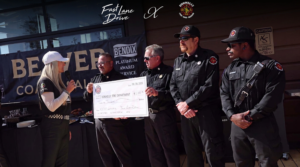
Rather than simply presenting a check, FLD members had an opportunity to sit at the same tables as the firefighters, learn more about their work, hear about the challenges they face, and personally thank them for the time, courage, and dedication required to protect the community.

These were the men and women responsible for helping keep safe the same area FLD members had spent the previous three days enjoying.

That connection mattered.

Fast Lane Drive Idaho proudly presented the Donnelly Fire Department with a $12,000 charity check.

The chapter has also asked the department to keep FLD updated on how the donation is ultimately utilized so members can see the tangible impact of their contributions.

It was the perfect conclusion to the weekend.

A gathering that began with engines and mountain roads ended with firefighters, gratitude, and a significant contribution directly back into the local community.

The Partners Who Made the Weekend Possible

An event of this scale requires a community of its own, and Fast Lane Drive Idaho is grateful to the sponsors and partners who helped make the Tamarack Charity Drive possible.

Spitfire Tacos and Tequila, with Todd and Christi Ketlinski, supported the Osprey Meadows Concours d’Elegance.

Western Roofing, represented by Rob Drinkard, sponsored exterior detailing for the participating cars.

Beaver Coach Sales, with Jason Smith, sponsored the chairlift and charity breakfast that brought FLD members and Donnelly firefighters together Sunday morning.

Barnoli & Sons, with Josh and Blair Barnoli, sponsored the private lunch overlooking Osprey Meadows.

The Imposter N/A Bubbly, with Hollykay Drinkard, provided beverages throughout the weekend.

Newport Beach McLaren, with Jonathan and Jordan, supported the kickoff to the weekend, while Newport Beach Lamborghini, with Jonathan, Jordan and the team, supported the cruise.

Tamarack Events, led by Beth Williams, served as an all-weekend sponsor partner, while Tamarack Resort and owner Gabe Navarro helped provide the spectacular setting for the experience.

Fast Lane Drive Idaho also extends a special thank-you to Divine Detail, whose team participated throughout the weekend and provided detailed washes for more than 20 vehicles.

FLD Transport and Isaac Crofts helped ensure exceptional vehicles arrived safely and were ready for the weekend.

The chapter also extends a heartfelt thank-you to TJ and Lisa Weber for their support throughout the event, as well as Heather, one of the behind-the-scenes heroes whose work helped keep the weekend moving seamlessly.

And, above all, thank you to Juan and the entire Donnelly Fire Department for joining Fast Lane Drive Idaho at Tamarack Resort on Sunday morning.

It was an honor to recognize the department’s courage, service, and dedication.

Giving Back to the local community

More Than an Exotic Car Club

Fast Lane Drive has always believed exotic cars can be the beginning of something much larger.

Yes, members join because they love cars.

They want to drive them.

They want access to memorable roads and destinations.

They want to meet other owners and enthusiasts who understand the passion behind these machines.

But the goal is to build something beyond the cars.

The Tamarack Charity Drive represented exactly what Fast Lane Drive Idaho is intended to be: memorable drives, extraordinary destinations, meaningful relationships, strong local partnerships, and a membership capable of using its collective strength to make a positive impact.

That philosophy extends across the broader Fast Lane Drive community.

Philanthropy isn’t something added to the calendar after the events are planned. It is an important part of what brings members together.

For the Idaho chapter, supporting the Donnelly Fire Department was particularly meaningful because these firefighters protect the same roads, mountains, homes, businesses, and communities that members were able to enjoy throughout the weekend.

Building the Car Community in Idaho Differently

Idaho offers something special for automotive enthusiasts.

The combination of mountain roads, changing landscapes, destination resorts, and an increasingly strong community of exotic and performance car owners creates opportunities that few other regions can match.

Fast Lane Drive Idaho wants to build on that foundation.

But becoming a leading car club in Idaho isn’t simply about assembling the largest number of supercars.

It is about what happens when those cars bring the right people together.

The friendships.

The experiences.

The businesses supporting one another.

The communities welcoming the club.

And the ability to collectively make a difference.

At Tamarack, that difference was $12,000.

Cars Bring Us Together. Purpose Takes Us Further.

Three days earlier, Fast Lane Drive Idaho members had arrived at The Toybox preparing for a weekend of driving.

They left Tamarack having accomplished something far more important.

Together, members and partners raised $12,000 for the Donnelly Fire Department and had the opportunity to personally meet and thank the firefighters their contributions would support.

That is the memory that will last beyond the mountain drives, the concours, the private estate, and even the cars themselves.

Fast Lane Drive Idaho’s Tamarack Charity Drive showed what can happen when automotive passion and community responsibility come together.

The cars brought everyone to Tamarack.

The friendships made the weekend special.

But the purpose behind the weekend gave it meaning.

And in the end, one of Fast Lane Drive Idaho’s biggest summer events didn’t conclude with the sound of exotic engines echoing through the Idaho mountains.

It ended around a breakfast table with the men and women who answer the call when their community needs them most — and $12,000 going directly back to support them.

Frequently Asked Questions – Fast Lane Drive Idaho

FAQ’s

1. What is Fast Lane Drive Idaho?

Fast Lane Drive Idaho is a members-only exotic car club that brings together owners of supercars, luxury, and high-performance vehicles for curated drives, exclusive events, networking, and charitable initiatives throughout Idaho and beyond. Members also gain access to every Fast Lane Drive chapter around the world.

2. What types of cars are accepted into Fast Lane Drive Idaho?

The Idaho chapter welcomes a curated selection of exotic, luxury, and performance vehicles from brands such as Ferrari, Lamborghini, McLaren, Porsche, Aston Martin, Bentley, Rolls-Royce, and other qualifying vehicles. Membership is based on both the vehicle and the applicant to ensure a strong community.

3. Where does Fast Lane Drive Idaho host events?

Fast Lane Drive Idaho hosts events across some of the state’s most scenic destinations, including Tamarack Resort, McCall, Boise, Sun Valley, and other premier driving roads and luxury venues. Members also have the opportunity to attend events hosted by FLD chapters across North America and Europe.

4. Does Fast Lane Drive Idaho support local charities?

Yes. Giving back is a core part of the Fast Lane Drive experience. The Idaho chapter regularly partners with local organizations and first responders through fundraising events and community initiatives. During the 2026 Tamarack Charity Drive, FLD Idaho raised $12,000 for the Donnelly Fire Department to support its firefighters and equipment needs.

5. How do I become a member of Fast Lane Drive Idaho?

Prospective members can apply online through the Fast Lane Drive website. Every application is reviewed, followed by an interview process to ensure new members are a great fit for the community. Membership includes access to exclusive Idaho events, global chapter events, private networking opportunities, luxury experiences, and charitable initiatives.

Philanthropic Car Events That Build Real Impact

A convoy of exceptional cars gets attention. What happens after the engines cool is what gives the day its value. The best philanthropic car events turn that attention into measurable support for a cause, while bringing accomplished people together around something bigger than the next destination.

For owners, the appeal is not simply writing a check or parking on a lawn for photographs. It is the chance to use a shared passion, personal network, and the visibility of high-performance vehicles to create a moment people remember – and a result a nonprofit can put to work.

Why Philanthropic Car Events Matter

A great car event already has rare ingredients: enthusiasm, presentation, access, and a community willing to show up. Add a credible charitable mission, and the gathering gains direction. The cars become a conversation starter, but the cause becomes the reason the room stays engaged.

That distinction matters. Affluent communities are regularly asked to support worthy organizations. A well-run event gives people a more personal way to participate. They meet the organizers, hear directly from beneficiaries, bring spouses and friends into the experience, and see where their contribution is going.

The social return matters too. Purpose has a way of cutting through surface-level networking. A founder, physician, investor, or collector may arrive because of the driving route, but leave having built a relationship with someone who shares both their standards and their commitment to giving back. That is where a car community becomes more than a calendar of meetups.

For a club with an international footprint, the opportunity is even stronger. Members can support causes that matter in their home cities while joining a broader culture of service across chapters. The biggest and most exclusive car club in the world should not be defined only by where it can take its members. It should also be defined by what its members can move forward together.

What Makes a Charity Car Event Worth Attending

The strongest events are designed around a clear answer to one question: What will this gathering make possible? “Supporting a good cause” is not enough. Guests should know whether their attendance funds pediatric care, veteran services, disaster relief, education, food security, or another specific outcome.

Specificity creates trust. If ticket revenue supports a nonprofit, say how. If an auction funds a defined program, explain the target. If a portion of sponsor support covers event costs while the remainder goes to the charity, be direct about that structure. Sophisticated guests do not need a sales pitch. They appreciate clarity and the confidence that their generosity is being handled well.

The cause also needs a natural fit. A charity focused on youth opportunity may pair well with a mentorship component or a student showcase. A veterans organization may be better served by an intimate drive, a meaningful dinner, and time for real conversation than by a crowded car show. A children’s hospital benefit can create an unforgettable family-friendly arrival experience without turning patients or families into props.

It depends on the organization, the city, and the audience. The right format is not always the largest one. A smaller dinner with 40 aligned guests can produce deeper commitments than a 400-car gathering with little connection to the mission.

Designing Philanthropic Car Events With Purpose

A charitable event should feel elevated, not overprogrammed. Guests came to enjoy great roads, compelling company, and memorable vehicles. The event should honor that expectation while keeping the cause visible throughout the experience.

Start with a format that suits the objective. A scenic drive with a participation donation works well when the goal is broad attendance and chapter energy. A private dinner and live auction can be more effective for raising significant funds from a concentrated group of decision-makers. A multi-stop rally may attract sponsors and media attention, but it also requires more operational discipline and can dilute the charitable message if the itinerary becomes the main story.

The experience should have a rhythm. Open with a concise welcome that frames the mission. Build in a moment where the nonprofit’s leadership or a credible representative explains the need in human terms. Give guests a clear opportunity to contribute, then let the event breathe. The drive, meal, and conversations should still feel like the reward for showing up.

Car owners also notice details. Secure parking, a well-planned route, professional staging, thoughtful hospitality, and a realistic schedule signal respect for their time and vehicles. Safety is non-negotiable. Clear driver expectations, route support, speed discipline, insurance awareness, and contingency planning protect participants, the host organization, and the charity’s reputation.

The Role of Sponsors

Sponsors can expand what an event can accomplish, but they should enhance the experience rather than dominate it. The right partner may underwrite a venue, offer a meaningful auction item, support transportation, or match donations. The wrong partner turns a purpose-led gathering into a promotional floor.

Choose businesses that align with the audience and the cause. Give them visibility that feels earned: a thoughtful introduction, an experiential touchpoint, or recognition tied to their contribution. Keep the number of sponsor messages controlled. Guests should leave talking about the people they met and the impact created, not the logos they saw.

Giving Beyond the Ticket

Ticket pricing is only one lever. Many successful events create several natural paths to participate, including direct donations, matching commitments, curated auction experiences, and post-event pledges. The key is avoiding pressure for pressure’s sake.

A compelling ask is specific, brief, and voluntary. If a member wants to fund an entire program component or introduce the nonprofit to their company, make space for that conversation privately. High-capacity guests often give more when they are invited into the strategy, not merely asked to raise a paddle.

The Network Effect of Shared Purpose

Business relationships do not become meaningful because two people exchanged contact information between courses. They become meaningful when there is context, trust, and a reason to reconnect. Philanthropic events create that context naturally.

A shared mission reveals how people think. You see who follows through, who brings others into the room, who asks thoughtful questions, and who gives without needing credit. Those are valuable signals in any network. The resulting relationships can lead to partnerships, mentorship, referrals, and friendships, but none of that needs to be forced.

That is why the guest mix matters as much as the cars. Invite people who will add conviction and conversation to the room: local operators, nonprofit leaders, members with relevant experience, and supporters who care about the mission. Exclusivity is not about making a cause feel inaccessible. It is about curating a room where every person can contribute something meaningful.

Fast Lane Drive approaches this intersection with the belief that your exotic car is just the beginning. Across a global community of high-performing members, the opportunity is to create experiences that carry momentum beyond the final stop – into the cities, organizations, and people who need it most.

Measuring What Actually Changed

A beautiful event is not automatically a successful one. The clearest measure is the money raised and delivered, but it should not be the only one. Track sponsor support, in-kind contributions, attendance, new donor introductions, volunteer commitments, and follow-up meetings generated for the nonprofit.

Then communicate the result. Thank guests promptly and report the outcome with precision. If funds were allocated after the event, follow up again when the charity can share what those funds accomplished. This is where credibility compounds. Members are more likely to return, bring a friend, or make a larger commitment when they can see the full arc from gathering to impact.

There is a trade-off here: elaborate production can make an event feel exceptional, but high costs can undermine the charitable result. Spend where it improves safety, guest experience, and fundraising potential. Be disciplined everywhere else. The goal is not to make generosity look expensive. The goal is to make it effective.

The next time a row of extraordinary cars gathers before sunrise, ask a better question than where the road leads. Ask who the day can help, who needs to be in the room, and what lasting action can begin once everyone arrives.

Fast Lane Drive Charity FAQs

1. What is the Fast Lane Drive charity event?
Fast Lane Drive is a fundraising event that brings car enthusiasts and community members together to support charitable causes through donations, activities, and special experiences.

2. Which charities does the event support?
The charities supported may vary by event. Details about the selected nonprofit organizations and how funds will be used are shared before each drive.

3. How can I participate?
You can participate by registering for the drive, attending the event, making a donation, sponsoring an activity, or volunteering.

4. Do I need a special car to join?
Participation requirements depend on the event. Some driving activities may have vehicle guidelines, but everyone is welcome to attend, donate, or volunteer.

5. How much of my donation goes to charity?
Donation distribution and event expenses are disclosed by the organizers. Contact the Fast Lane Drive team for details about the specific event you are supporting

Exotic Car Club Benefits Beyond the Drive

A McLaren at a Saturday cars-and-coffee gathering will draw a crowd. It will not necessarily build your circle. The real exotic car club benefits begin when the car becomes an introduction to people who operate at your level, pursue meaningful experiences, and understand that time is the rarest asset.

For high-performance vehicle owners, the right club is not a parking lot full of impressive machines. It is a private network with momentum. It turns the car you already own into access to relationships, destinations, and stories that would be difficult to create alone.

Exotic Car Club Benefits Start With the Right Room

Most owners can find a local meetup. Far fewer can consistently spend time with founders, executives, investors, physicians, attorneys, and collectors who share both their standards and their appetite for life outside the office.

That distinction matters. Casual events often revolve around who brought the loudest car. A curated, application-based club attracts members who value discretion, follow-through, and real connection. The conversations may start with a V12, a track day, or the route ahead. They can quickly move to a new market, a shared investment thesis, a business challenge, or a valuable introduction.

Your network is your net worth, but only when it is built on genuine trust. Driving together creates an unusual foundation for that trust. You see how people show up, handle pressure, treat staff, and engage with others. Those signals are more meaningful than a stack of business cards collected at a standard networking event.

The outcome is not a promise of deals. It is more valuable than forced networking: proximity to capable people, repeated shared experiences, and relationships with room to become personal or professional over time.

Your Car Becomes a Passport, Not a Weekend Object

An exotic car is engineered for more than a short drive to dinner. Yet ownership can become surprisingly isolated. Work expands, friends have different schedules, and planning a worthwhile route, restaurant, hotel, or multi-day trip takes real effort.

A serious club removes that friction with recurring scenic drives, destination rallies, private dinners, and automotive travel designed around the experience rather than a generic itinerary. You arrive knowing the details have been considered and the people around you belong there.

That changes the role of the vehicle. A Ferrari, Lamborghini, Porsche GT car, Aston Martin, McLaren, or hypercar stops being something that waits in the garage for the perfect occasion. It becomes part of a calendar filled with reasons to drive it.

There is a practical upside, too. Organized events bring together owners who understand the realities of these cars: storage, transport, tire choices, service relationships, market shifts, and how to use a vehicle without treating it like a museum piece. That knowledge is useful, but the shared confidence to actually enjoy the car is often the greater return.

Cross-Chapter Access Expands Your Social Map

A strong local chapter is valuable. A club with a connected international footprint changes the equation.

For members who travel for work, maintain multiple homes, or simply want more out of their weekends, cross-chapter reciprocity creates continuity in new cities. Instead of researching where the right automotive community gathers, you can enter an established room of vetted peers. The car club becomes part of how you experience Los Angeles, Miami, New York, Toronto, Monaco, Paris, Idaho, Utah, and other markets where exceptional roads and exceptional people meet.

This is particularly powerful for people whose businesses are no longer tied to one zip code. A global member network can create familiar faces in unfamiliar places, whether you are attending a rally, joining a dinner, or planning a longer automotive escape.

There is a trade-off. Not every chapter will have the same event cadence, member mix, or driving culture. Before joining any club, ask how reciprocity works in practice, which events travel well, and whether members can participate meaningfully beyond their home market. Scale only has value when it feels connected.

Better Events Create Better Memories

The best club events are not defined by velvet ropes or a photo opportunity. They are defined by what happens after the engine cools.

A well-planned drive has rhythm: an early meet point, a route that rewards the car, a lunch worth lingering over, and a group that makes the miles feel shorter. A multi-city rally adds hotels, private venues, local experiences, and enough structure to make the trip effortless without making it feel scripted.

Private dinners and lifestyle events matter for a different reason. Not every meaningful conversation happens with a helmet on. Partners, spouses, and close friends can become part of the community, which gives membership more staying power than a club built around performance alone.

The right event calendar should offer variety. Some members want technical driving days and challenging roads. Others prefer a relaxed dinner, a charity function, or a weekend trip with their family. A club that serves only one version of the lifestyle will eventually feel narrow. The best communities create multiple ways to belong.

Status Has More Value When It Comes With Substance

There is no point pretending exclusivity is irrelevant. People who have worked hard for exceptional vehicles and exceptional lives want to spend time in environments that reflect their standards. Membership signals taste, access, and shared expectations.

But status without substance gets old quickly. The most exclusive car club in the world should not feel like a stage where everyone is performing success. It should feel like a place where accomplished people can be fully present, enjoy their cars, and meet others without explaining why ambition still matters after they have already achieved a great deal.

That is why a selective application process serves a purpose beyond exclusivity. It protects the member experience. It helps ensure that events remain respectful, conversations remain worthwhile, and the community has a culture members are proud to bring their guests into.

For Fast Lane Drive, the goal is bigger than assembling impressive cars. With 28 chapters across North America and Europe, the community is built for owners who have outgrown average social plans and want their vehicle to create wider access, stronger relationships, and a more memorable way to move through the world.

Philanthropy Gives the Experience a Larger Purpose

A great day behind the wheel is worth having. A great day that creates measurable good carries further.

Philanthropic events give members an opportunity to use the visibility and energy around exotic cars for something beyond personal enjoyment. They can support local causes, bring together people with the capacity to give, and create moments where a shared passion becomes shared purpose.

This is not an accessory to the experience. For many successful people, contribution is a central part of what success means. A club that organizes charitable giving gives members a way to connect their personal interests with the communities where they live and build.

How to Evaluate an Exotic Car Club Before You Apply

Membership is a commitment of time as much as money, so look past the highlight reel. Ask whether the events are recurring or occasional, whether the member base reflects the people you want around you, and whether guests and partners are welcomed in the right settings.

Also consider the club’s reach. If you rarely leave your home city, a tightly run local group may be enough. If your calendar includes travel, multiple properties, or business across markets, global access may be one of the most meaningful benefits available.

Finally, be honest about what you want from your car. If you want only a larger audience for it, almost any meetup will do. If you want a richer social life, sharper professional relationships, driving experiences worth clearing your calendar for, and a community that matches your pace, choose a club built around more than the cars.

Your exotic car is just the beginning. Put it in the right room, point it toward the right roads, and let the next conversation carry as much value as the drive.