Introduction: More Than a Car; A Cultural Icon
Few cars in history have managed to transcend their category and become symbols of aspiration, precision, and identity. The Porsche 911 is one of those rare machines. It’s not just a sports car it’s a statement. A signal. A reflection of discipline, taste, and performance-driven living.
Since its debut in 1964, the 911 has maintained a level of consistency that is almost unheard of in the automotive world. While other brands reinvent themselves every decade, Porsche has refined the 911 evolving it without losing its soul.
Within the world of high-performance vehicles, the 911 occupies a unique position. It delivers supercar-level performance while remaining usable, comfortable, and practical enough for everyday driving. This duality is what has made it a cornerstone in the collections of enthusiasts, entrepreneurs, and collectors alike.
The Origins of a Legend
The Porsche 911 was introduced as a successor to the Porsche 356, but it quickly carved out its own identity. Designed by Ferdinand “Butzi” Porsche, the grandson of the company’s founder, the 911 featured a design language that would go on to define generations.
At its core, the 911 was built around an unconventional idea: placing the engine behind the rear axle. While most performance cars favored front-engine or mid-engine layouts, Porsche doubled down on this rear-engine configuration and perfected it over decades.
What began as a lightweight sports coupe evolved into a global icon. Each generation from the early air-cooled models to today’s technologically advanced machines has contributed to the mythology of the 911.
Engineering Philosophy: Precision Over Excess

What separates the 911 from other exotic cars is its engineering philosophy. It’s not about being the loudest, the flashiest, or the most extreme. It’s about balance.
Rear-Engine Layout
The 911’s rear-engine design creates a unique driving experience. With the engine sitting over the rear wheels, the car benefits from exceptional traction especially under acceleration. This gives the 911 a distinct advantage in real-world driving conditions.
However, this layout also requires precision. Too much weight at the rear can create instability. Porsche has spent decades fine-tuning suspension, aerodynamics, and weight distribution to make the 911 one of the most balanced sports cars ever built.
Flat-Six Engine
At the heart of every 911 is a flat-six engine. Known for its distinctive sound and smooth power delivery, this engine configuration contributes to the car’s low center of gravity, improving handling and responsiveness.
Driver-Focused Interior
Step inside a 911, and everything is designed around the driver. The seating position, the steering wheel, the visibility it all reinforces one thing: control. This isn’t a passive luxury experience. It’s an active one.
The Evolution of the 911: Key Generations
Over the years, the Porsche 911 has gone through multiple generations, each bringing technological advancements while preserving the core DNA.
- Classic Era (1960s–1980s)
Air-cooled engines, analog driving feel, lightweight construction. - 964 & 993 (Late 80s–90s)
Introduction of modern features like all-wheel drive and improved aerodynamics. The 993 is often considered the last of the “pure” air-cooled 911s. - 996 & 997 (2000s)
Transition to water-cooled engines. Significant leap in performance and usability. - 991 & 992 (Modern Era)
Wider stance, advanced tech, digital integration, and incredible performance capabilities.
Each generation builds on the last, creating a lineage that feels continuous rather than fragmented.
The Different Versions: Choosing Your Identity
One of the most compelling aspects of the 911 is its range. Each version offers a different experience, catering to different types of drivers and lifestyles.
Carrera: The Entry Point
The Carrera is where most people begin their 911 journey. It offers a perfect balance of performance, comfort, and daily usability. For many, this is the ideal version a car that can handle both city streets and weekend drives with equal ease.
Turbo / Turbo S: Everyday Supercar
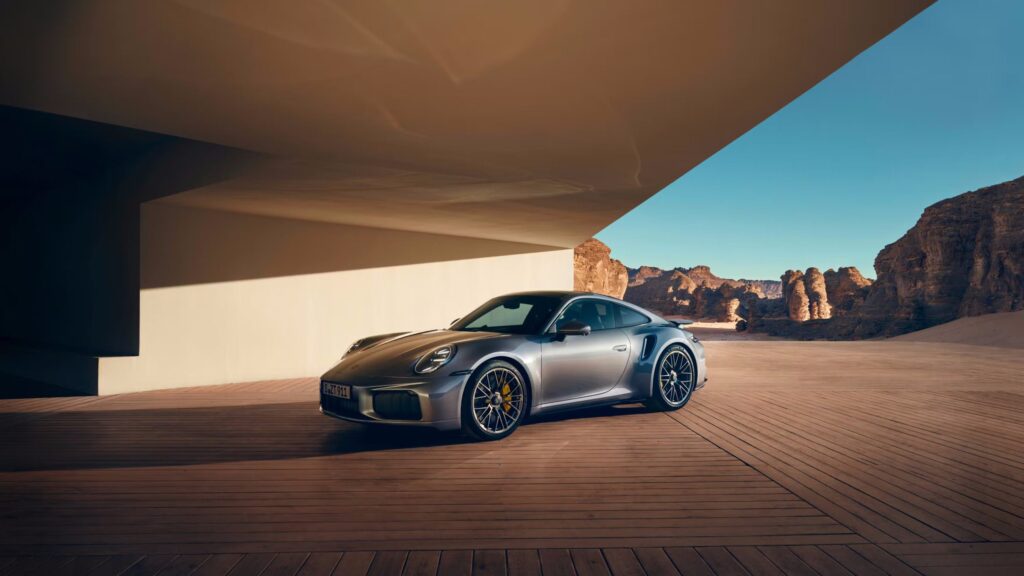
The Turbo models take performance to another level. With all-wheel drive and massive power output, the Turbo S is capable of acceleration that rivals hypercars while still being comfortable enough for daily use.
This is the version that blends status with capability. It’s fast, refined, and undeniably impressive.
GT3 / GT3 RS: Pure Performance
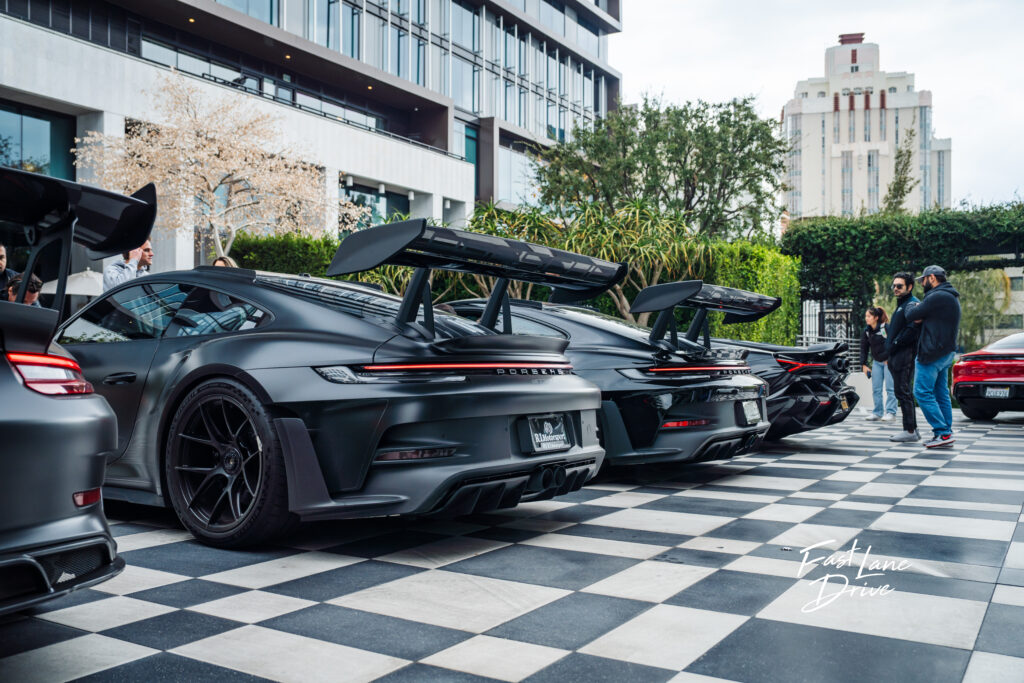
If the Carrera is balanced and the Turbo is powerful, the GT3 is focused. Built with the track in mind, the GT3 and GT3 RS prioritize precision, aerodynamics, and high-revving performance.
These are the cars for purists the drivers who value connection, feedback, and control above all else.
Dakar: Breaking the Rules
The 911 Dakar challenges everything people think they know about the 911. Designed for off-road driving, it proves that the 911 platform is more versatile than ever imagined.
Color, Spec, and Presence

In the world of high-end cars, specification matters. The same model can feel completely different depending on how it’s configured.
Bold Colors: Attention and Energy
Colors like Miami Blue, Python Green, and Lava Orange command attention. They’re built for visibility, social media performance, and instant recognition.
These specs tend to perform better in digital content, driving higher engagement and click-through rates.
Neutral Tones: Understated Luxury
Chalk, grey, black, and white offer a more refined aesthetic. These colors align with a minimalist, high-end lifestyle—less about attention, more about presence.
Classic Identity: Guards Red
Few colors are as synonymous with Porsche as Guards Red. It represents heritage, performance, and tradition.
Why the 911 Still Dominates

In a market filled with increasingly extreme hypercars and electric innovations, the Porsche 911 continues to hold its ground. Why?
1. Timeless Design
The silhouette of the 911 has remained consistent for decades. The round headlights, the sloping rear, the wide stance it’s instantly recognizable.
2. Daily Usability
Unlike many exotic cars, the 911 can be driven every day. It’s comfortable, reliable, and practical enough for real-world use.
3. Performance Without Compromise
Whether you’re driving through city streets or pushing the limits on a track, the 911 delivers. It adapts to the driver, not the other way around.
4. Heritage and Credibility
Owning a 911 isn’t just about the car it’s about being part of a legacy. It connects you to decades of engineering excellence and motorsport success.
The 911 in the Modern Lifestyle
The Porsche 911 isn’t just a machine it’s a gateway.
Within communities like Fast Lane Drive, cars like the 911 serve as connectors. They bring together individuals who share a mindset people who value performance, discipline, and elevated experiences.
The drive is just the beginning.
What follows are the conversations, the connections, and the environments that come with it. Ocean-view mornings. Late-night drives. Private gatherings. The kind of moments that don’t need to be posted but are never forgotten.
This aligns directly with the Fast Lane Drive philosophy:
The drive is the gateway. The people are the differentiator. The lifestyle is the reward.
Fun Facts That Define the 911
- The 911 has remained in continuous production since 1964 making it one of the longest-running sports car models in history.
- The rear-engine layout, once considered a disadvantage, is now one of its defining strengths.
- The GT3 engine can rev up to 9,000 RPM delivering one of the most exhilarating driving experiences available.
- The 911 Turbo introduced one of the first uses of turbocharging in production sports cars.
Final Thoughts: Why It Still Matters
The Porsche 911 is not about chasing trends. It’s about setting a standard.
In a world that constantly shifts toward what’s next, the 911 remains grounded in what works precision engineering, timeless design, and a relentless commitment to performance.
It doesn’t try to be everything. It focuses on being exceptional at what it is.
And that’s exactly why it continues to lead.
Because at the end of the day, this isn’t just about speed.
It’s about the life you build around it.
Frequently Asked Questions
What makes the Porsche 911 unique?
The Porsche 911 stands out for its rear-engine layout, timeless design, and balance between everyday usability and high performance. It’s one of the few sports cars that delivers both comfort and supercar-level capability.
What are the main Porsche 911 models?
The main versions include the Carrera (entry-level performance), Turbo and Turbo S (high-performance daily drivers), GT3 and GT3 RS (track-focused models), and the Dakar (off-road capable variant).
Is the Porsche 911 a good daily driver?
Yes, the Porsche 911 is widely considered one of the best daily-drivable sports cars. It offers comfort, reliability, and practicality while still delivering exceptional performance.
What engine does the Porsche 911 have?
Most Porsche 911 models use a flat-six engine mounted at the rear of the car. This setup provides a low center of gravity and contributes to its unique driving dynamics.
What are the most popular Porsche 911 colors?
Popular colors include Miami Blue, Chalk Grey, Guards Red, black, and white. Bright colors tend to stand out more, while neutral tones offer a more understated luxury look.
How fast is a Porsche 911?
Performance varies by model, but a Porsche 911 Turbo S can accelerate from 0–60 mph in under 3 seconds, placing it among the fastest production sports cars.