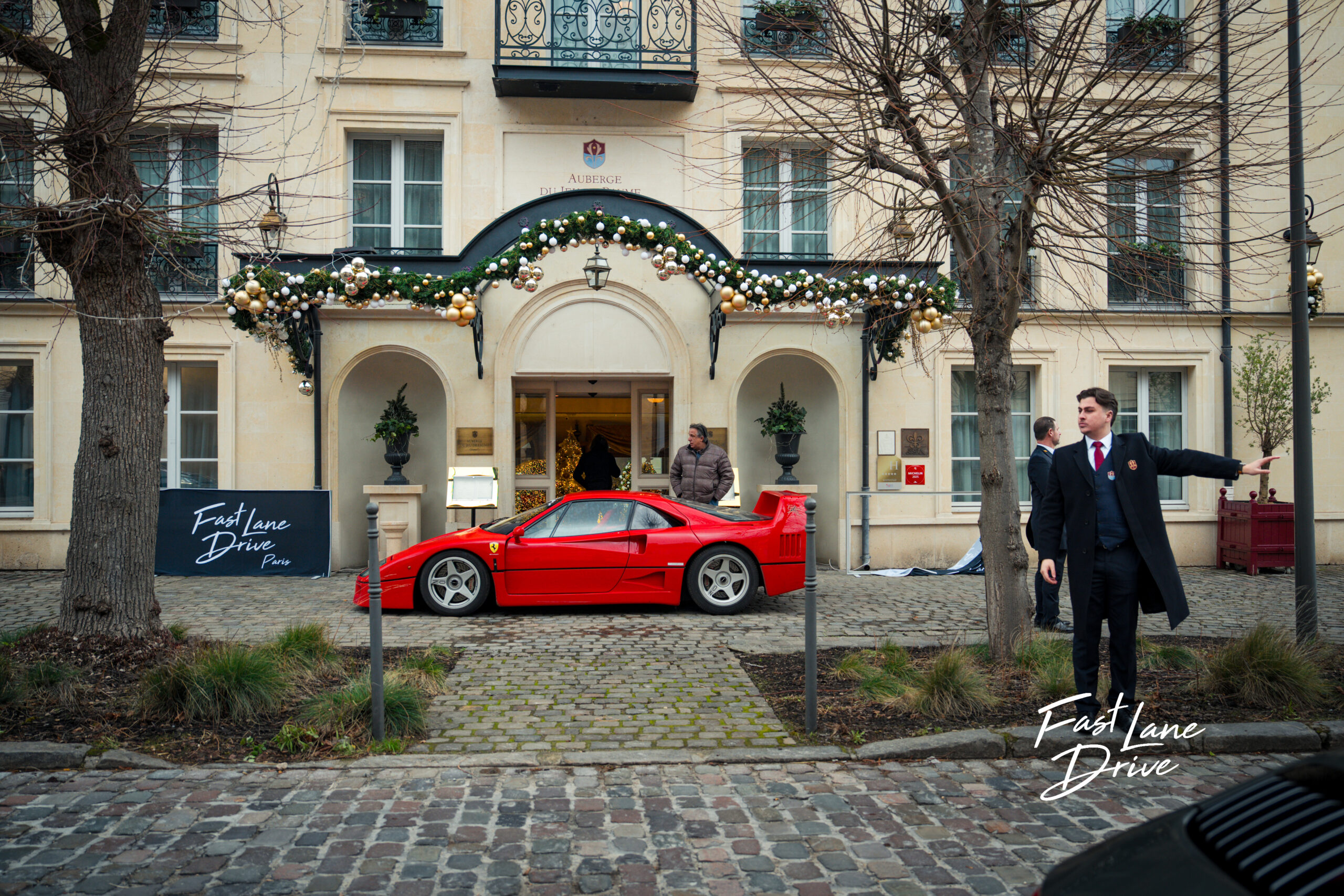
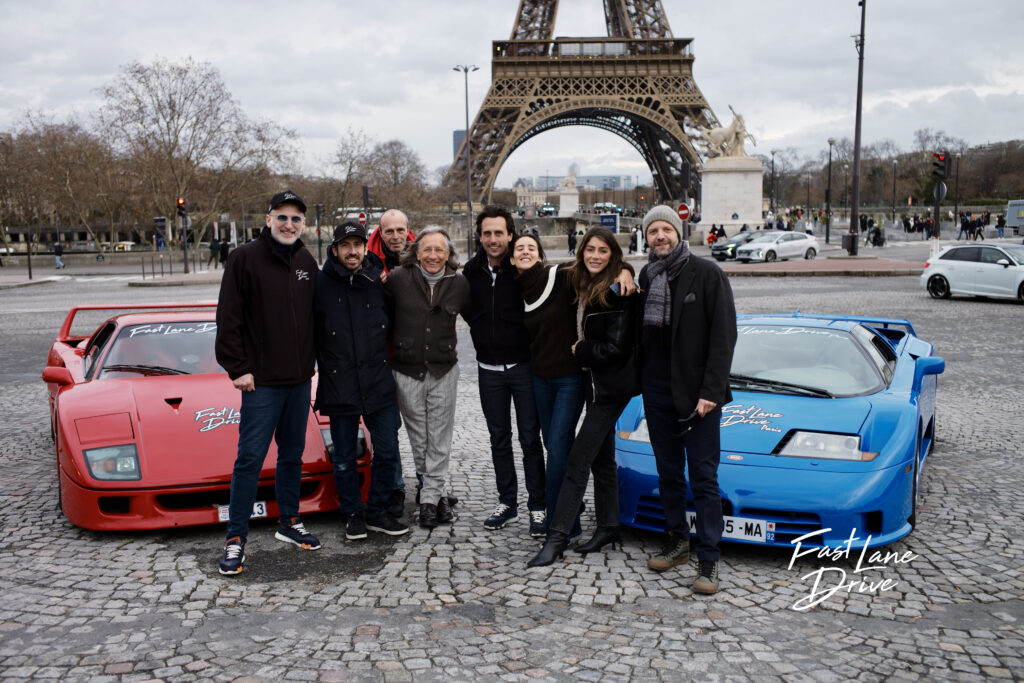
There are moments in automotive history that just stop you. Where the car, the driver, and the place come together in a way that feels less like content and more like something worth remembering. Raul Marchisio driving a Ferrari F40 through the streets of Paris, with Fast Lane Drive Paris is one of those moments.
No camera tricks. No digital polish. No modern safety systems quietly smooth everything out in the background. Just one of the most legendary cars ever built, alive and loud, moving through one of the most beautiful cities in the world, Paris.
This is what driving looked like when Enzo Ferrari was still around to approve it.
A Car Born From a Legend’s Final Vision
To truly appreciate what Marchisio experienced behind the wheel, you have to understand what the Ferrari F40 actually represents. Built in 1987 to celebrate Ferrari’s 40th anniversary, the F40 was more than a milestone it was a statement. A declaration that raw performance, mechanical purity, and driving engagement would never be sacrificed on the altar of comfort or convenience.
Most remarkably, the F40 was the last car personally approved by Enzo Ferrari before his death in 1988. That fact alone gives the car an almost sacred quality within the automotive world. When the old man signed off on it, he wasn’t just approving a product he was cementing his legacy in twin-turbocharged, fire-breathing aluminum.
The numbers tell part of the story. A 2.9-liter twin-turbocharged V8 producing around 478 horsepower. A curb weight of just 1,100 kilograms, achieved by stripping away everything unnecessary no carpets, no door handles, no unnecessary luxury whatsoever. A top speed that broke the 200 mph barrier for the first time in a production Ferrari. But numbers alone cannot capture what the F40 truly is. For that, you need to hear it. You need to feel it. You need to drive it through Paris.
Paris as the Perfect Stage
Why Paris? Because contrast creates drama. The Ferrari F40 is a brutal, uncompromising machine a car designed for circuits, for wide-open roads, for environments where its savage power can be fully unleashed. Placing it on the tight, cobblestoned streets of Paris, surrounded by centuries of architecture, pedestrians, and the everyday rhythm of city life, creates an almost surreal tension that is absolutely captivating.
The narrow Parisian streets amplify the F40’s sound in ways that a racetrack simply cannot. Every blip of the throttle bounces off centuries-old stone walls. Every turbo spool echoes through grand boulevards that have witnessed emperors, revolutions, and countless moments of human history. The city becomes an accidental concert hall for one of the greatest engine soundtracks ever recorded.
Watching Marchisio navigate the F40 through this environment is a reminder of how demanding these early supercars actually were. There is no traction control smoothing out the power delivery. There is no stability system catching the rear when the turbos spool and the torque hits. Every input requires skill, respect, and an intimate understanding of what the car is doing beneath you. This is analog driving in its purest, most demanding form.
Raul Marchisio and the Art of the POV Drive
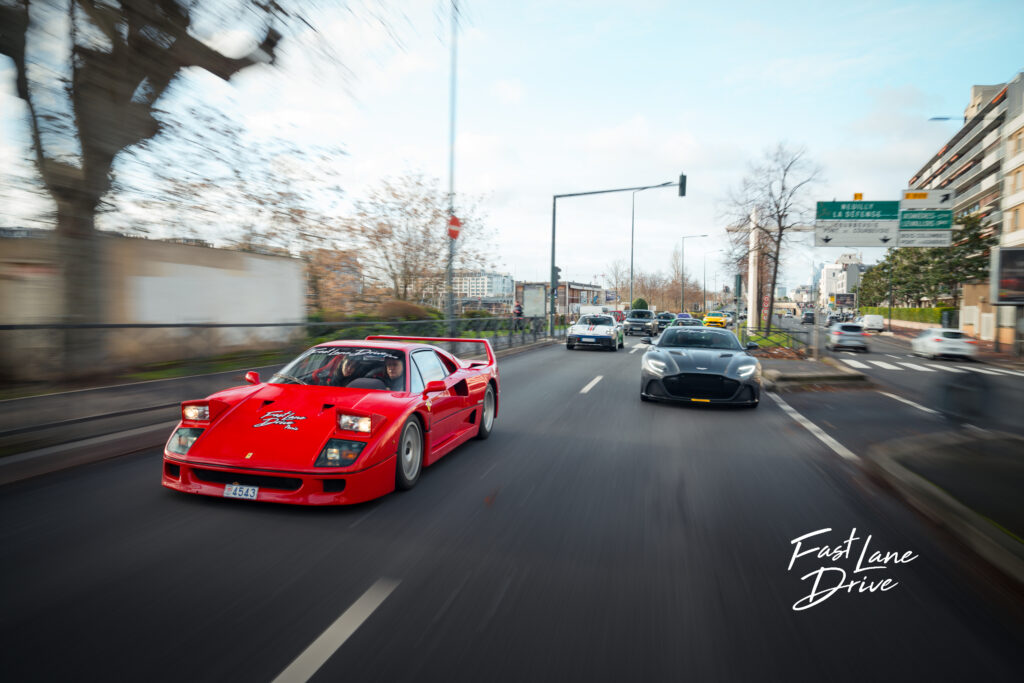
Raul Marchisio has always had a knack for filming supercars the right way, from the seat, not the sidewalk. No Hollywood angles, no dramatic slow motion. Just you, him, and the car, as close to the real thing as a screen will allow.
And honestly, the F40 might be the perfect car for this format. Because driving one isn’t something you watch, it’s something you feel. The induction noise pulling hard under acceleration. The wastegate doing its thing between shifts. The body panels that flex and shudder in ways that remind you there’s no unnecessary material anywhere on this car. You don’t drive an F40 so much as negotiate with it. Every gear change needs intention. Every input gets a response.
Modern supercars are incredible machines, but they’ve also gotten very good at hiding what they’re doing. The F40 hides nothing. It tells you everything, all the time, through the wheel, the pedals, the seat and Marchisio’s camera picks up enough of that to make it feel real.
Then there’s Paris. The city has no business making a 1980s racing car look this good, and yet here we are. Landmarks drifting past the windows. The Seine somewhere in the background. And that V8 bouncing off buildings that have been standing for centuries, completely indifferent to how loud it is.
It’s a genuinely special combination.
What This Drive Means for Ferrari’s Legacy
The Ferrari F40 occupies a unique and irreplaceable position in automotive history. It bridges two eras the raw, driver-focused supercars of the 1980s and the increasingly technologically complex machines that followed. It represents a philosophy that Enzo Ferrari championed throughout his entire career: that the driver is the most important component of any performance car, and the machine’s job is to serve and amplify that driver’s ability, not replace it.
Seeing it driven through Paris in 2026 is genuinely emotional for anyone who appreciates automotive history. This is not a museum piece. This is not a trailer queen wrapped in protective film, transported between shows, and never truly used. This is a living, breathing piece of history being exercised the way it was meant to be hard, loud, and completely, unapologetically alive.
If Enzo Ferrari could watch Marchisio navigate his creation through the streets of Paris, there is little doubt he would approve. This is exactly the kind of driving he always wanted to inspire.